
Have you ever been asked that question? What is God calling you to do for His Kingdom? What role do you play in the Body of Christ? How would you respond? Maybe you would say that God is calling you to be a pastor or an evangelist. Perhaps you feel your calling is to be a missionary, to work with children or youth, to lead in worship, or to serve in any number of other ways. And, if we were to ask this question to a group of people, most answers would probably involve some ministry or position within the church, such as those mentioned above.
However, let me propose another way of looking at this question. As I read the New Testament, I see only one thing that we are called to do, and that is found in Matthew 28:18-20.
18 And Jesus came and said to them, “All authority in heaven and on earth has been given to me. 19 Go therefore and make disciples of all nations, baptizing them in the name of the Father and of the Son and of the Holy Spirit, 20 teaching them to observe all that I have commanded you. And behold, I am with you always, to the end of the age.” (ESV)
The only calling we, as Christians, have is to make disciples. The other positions, ministries, or ways of serving in the church are avenues through which we can fulfill our calling. For example, God has given me the gift of teaching and has placed me in the position of pastor in the church, but these are only the tools available to me to fulfill my calling of making disciples. Therefore, everything I do as a pastor is centered on using my gift to make disciples. Looking at my role as a pastor in this way helps me avoid distractions that can come with ministry and stay focused on what I am really called to do: make disciples. This is also true for all ministries, regardless of their role.
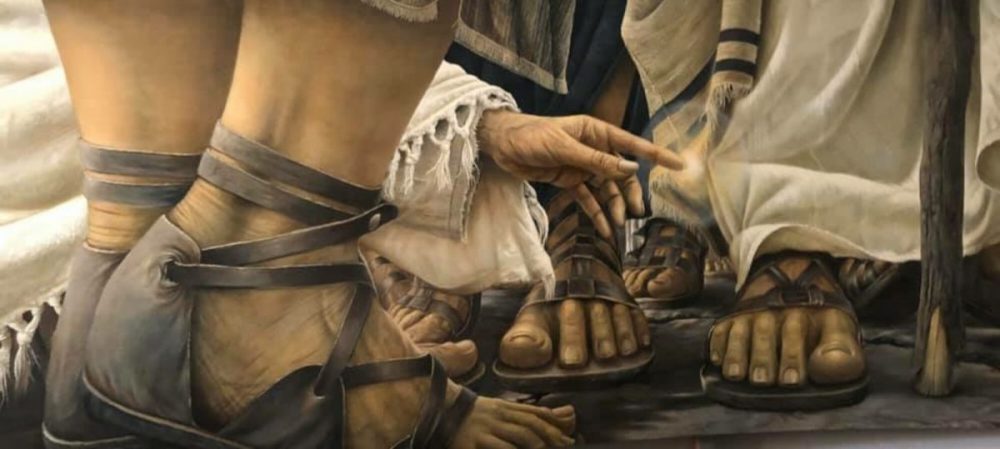
The next question, then, is, “What does it mean to make disciples?” My observation over the years is that most churches understand discipleship as having a class to impart information on doctrine and the Christian life. This is important, but that is only part of it. In the early church, a disciple wanted to know what his rabbi knew, do what his rabbi did, and become like his rabbi. The emphasis was not just on information but also included application and transformation.
Our goal, then, as “disciple-makers,” is to use the gifts God has given us and the role He has placed us in the Body of Christ to help people grow more in their knowledge about Jesus and His Word, learn how to apply those truths to their lives so they can become more like Him and become disciple-makers themselves.
There is not enough space in this blog post to discuss further what it means to make disciples and how the early church fulfilled its calling. My book, Become A New Testament Church Today, goes into more detail on the subject. Just follow the link below.